Traveler's Guide:
What to see in Barcelona: Top 10 attractions and 3D model

„Gaudí´s city“
The rich history of Barcelona
The history of Barcelona dates back to 218 BC, when the Romans founded Barcino as a small colony on the Mediterranean coast. Over time, the city grew into an important trading hub. After the fall of the Roman Empire, the city was conquered by the Visigoths, Moors, and then the Franks in 801 AD. In the Middle Ages, Barcelona became a powerful maritime center, key to the expansion of the Crown of Aragon. Despite challenges such as the War of the Spanish Succession and the Civil War, the city prospered, hosted the 1992 Olympic Games, and became a global destination.
Do you want to know what makes Barcelona such an unforgettable city and everything you can see in Barcelona? Definitely keep reading.
Unforgettable attractions in Barcelona
In the 19th and early 20th centuries, the architect Antoni Gaudí, known for his unique and revolutionary modernist style, left a lasting impact on the city. Gaudí's works, such as La Sagrada Família and Park Güell, shaped Barcelona's skyline and its identity.
Barcelona is a dynamic metropolis with over 1.6 million residents and a metropolitan area of 5 million people. It is the second-largest city in Spain and a major European center for tourism, commerce, and culture. The city welcomes almost 8 million visitors annually and is home to UNESCO World Heritage sites, including La Sagrada Família and Park Güell. Barcelona offers 12,000 taxis, 1,800 parks, and 4.5 km of beaches, combining history, architecture, and lifestyle.
As the capital of Catalonia, Barcelona is key to the independence movement, with many Catalans desiring separation from Spain. The city's identity and pride in its Catalan heritage are also reflected in the Catalan language, which differs slightly from traditional Spanish.
What to see in Barcelona?
La Sagrada Família – Gaudí's masterpiece and the symbol of the city, still under construction after 130 years.
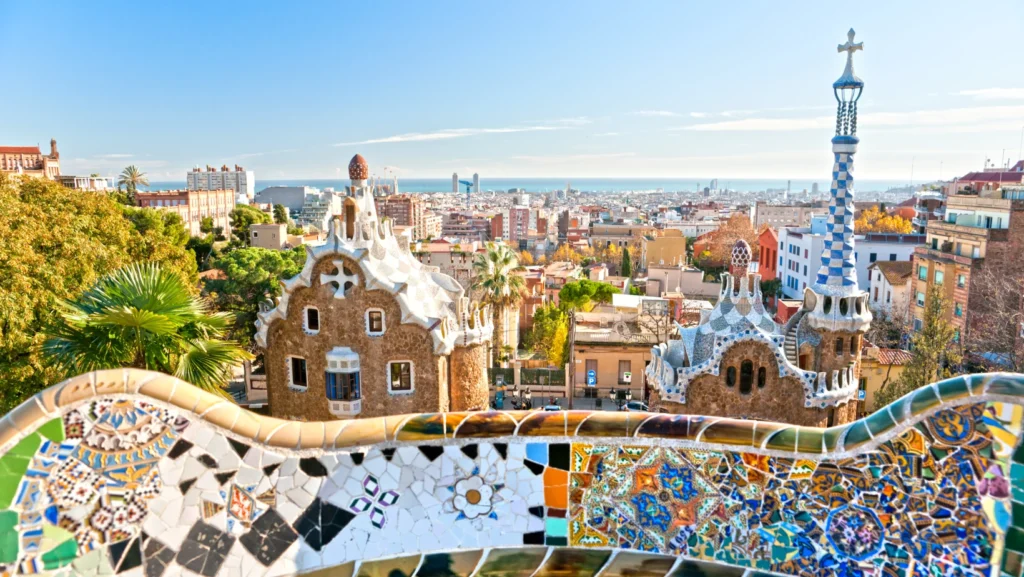
Park Güell – A picturesque park by Gaudí, full of colorful mosaics and breathtaking architecture.
Casa Batlló – A unique modernist building by Gaudí, known for its playful design and intricate details.
La Rambla – A bustling pedestrian street lined with shops, restaurants, and street performers, ideal for people-watching.
Barri Gòtic (Gotická štvrť) – Wander through narrow medieval streets and discover charming squares, the Barcelona Cathedral, and historical monuments.
Montjuïc – A hill offering panoramic views of the city with attractions like Montjuïc Castle, the Olympic Stadium, and the Magic Fountain.
Park de la Ciutadella – A beautiful green space with a lake, a zoo, museums, and the magnificent Cascada Monumental.
Camp Nou – An iconic stadium, home to the football giant FC Barcelona, offering tours and a museum for world football fans.
Palau de la Música Catalana – A UNESCO-listed concert hall with breathtaking modernist architecture.
Casa Milà (La Pedrera) – A Gaudí marvel known for its undulating stone facade and rooftop sculptures.
La Barceloneta Beach – A bustling coastal area with golden sand, beach bars, and a lively atmosphere.
Tibidabo – A hill with breathtaking views, home to the Tibidabo Amusement Park and the Temple of the Sacred Heart.
At this link you can purchase tickets for the mentioned attractions and find more inspiration on what to see in Barcelona!
What can you see on your 3D model?
On your 3D model of Barcelona, you can see the iconic architecture of Eixample, including the Sagrada Família, which blends history with modern urban life.

A masterpiece in progress: The Sagrada Familia in Barcelona, designed by Antoni Gaudí, is one of the most significant architectural works in the world. Construction began in 1882 and is expected to be completed by 2026, which will be the centenary of Gaudí's death. The construction is taking longer than the building of the Great Pyramids of Giza (archaeologists estimate that the pyramids were built using ancient tools over 10-20 years). The basilica will reach a height of 170 meters, making it the tallest religious building in the world, slightly lower than Barcelona's Montjuïc mountain, which measures 173 meters. Gaudí deliberately designed it to be lower than the mountain, ensuring that nothing surpasses nature or God's creation.
The architecture blends Gothic and modernist elements, deeply inspired by nature. The interior features symbolic designs, with columns resembling a tree trunk that branches out into the ceiling, creating a forest effect. These designs represent a connection between nature and the spiritual world. Other natural symbols, such as turtles, are also present, symbolizing stability and longevity, reflecting Gaudí's belief that architecture should be in harmony with the natural world.
The facades of the basilica represent the three stages of Christ's life: Nativity, Passion, and Glory. The Nativity facade symbolizes the birth of Christ and is full of joy and detail. The Passion facade depicts his suffering and death, with sharp, angular features. The Glory facade will represent his resurrection and ascension, symbolizing eternal life.
The construction of the Sagrada Familia is funded by public donations (primarily from ticket sales), and more than 1 billion euros is needed for its completion. It has become one of the most visited monuments in Spain and is living proof of Gaudí's genius.
Located directly in front of the basilica, Plaça de la Sagrada Família is one of the busiest places in this area, surrounded by shops, cafes, and restaurants. It offers a dynamic and lively atmosphere, where locals and tourists come and go throughout the day. The square also serves as a major transport hub, with the Sagrada Família metro station connecting visitors to Barcelona's wider public transport system.
Just opposite La Sagrada Família is Plaça de Gaudí, a charming square that offers one of the best views of the basilica. The square is a peaceful place with beautiful fountains and lush greenery, creating a tranquil environment for visitors. It is an ideal spot to admire the majesty of La Sagrada Família from a distance and to enjoy a moment of relaxation.
The streets around La Sagrada Família follow the famous grid system of the Eixample district, designed by urban planner Ildefons Cerdà in the 19th century. This system is known for its wide, straight streets, which average 20 meters in width, and were designed to maximize sunlight, ventilation, and air circulation throughout the city. The grid system also makes it easier for visitors to navigate, making it a key element of Barcelona's modernist urban landscape. This design helps maintain an organized and spacious feel in a busy city, improving the experience for both residents and tourists.

10 Interesting Facts
In 1999, Barcelona became the first city to win the Royal Gold Medal for architecture, recognizing its exceptional urban design and architecture. Barcelona is home to nine UNESCO World Heritage sites, seven of which are works by Gaudí, including La Sagrada Família, Casa Batlló, and Park Güell.
Casa Milà (La Pedrera) and Casa Batlló are two of Gaudí's most iconic buildings. The roof of Casa Milà is decorated with surreal chimneys resembling human figures, while its interior is known for its flowing, organic curves instead of straight lines. Casa Batlló, with a roof in the shape of a dragon and windows resembling masks, draws inspiration from the legend of Saint George, who killed the dragon. The facade is decorated with broken ceramic tiles, creating an amazing visual effect in the sunlight. Both buildings are excellent examples of Gaudí's unique modernist style.
Collserola Park, the largest metropolitan park in the world, covers approximately 8,000 hectares, which is more than 22 times larger than Central Park in New York. This vast green space is home to more than 190 species of animals and offers extensive hiking trails that would take weeks to explore. Known as the "green lungs" of Barcelona, the park is an important natural area that provides a refreshing escape from the urban environment.
The city boasts more than 20 restaurants with a famous Michelin star, highlighting its rich culinary scene.
La Rambla is one of the most famous streets in Barcelona, lined with street performers, flower stalls, and cafes. A vibrant atmosphere and the La Boqueria market make this place an essential stop. La Rambla is actually a combination of five smaller streets known collectively as Las Ramblas. It includes Rambla de Canaletes, Rambla dels Estudis, and Rambla de Sant Josep, which form the famous pedestrian promenade.
FC Barcelona plays at the Camp Nou stadium, which is the largest football stadium in Europe with a capacity of nearly 100,000 spectators, which is enough to fit the entire population of Andorra, which is approximately 80,000. Visitors can explore the club's museum and also take stadium tours.
The famous Spanish artist Pablo Picasso spent his early years in Barcelona, where he attended the School of Fine Arts. The Picasso Museum in the Born district houses more than 4,000 of his works.
Before it became a Parisian icon, the design of the Eiffel Tower was originally offered to Barcelona for the 1888 World's Fair. However, the city rejected it, fearing it would be an eyesore.
Unlike most cities, Barcelona has its beaches right in the city center. Before the 1992 Olympic Games, Barcelona's coastline was mostly industrial, with factories lining the shore. Residents often described the city as "turning its back on the sea." When the city was chosen to host the games, shoreline revitalization became a major priority. This transformation involved the creation of artificial beaches, with sand imported from abroad, leading to the popular and picturesque beaches that define Barcelona today.
Some believe that Barcelona's origins date back even before Rome. Evidence suggests settlements as early as 5000 BC. Legend says the city was founded either by the mythological Hercules or the Carthaginian general Hamilcar Barca in the 3rd century BC.
Barcelona is home to the Barcelona Supercomputing Center, which houses MareNostrum, the largest supercomputer in southern Europe. What makes it truly unique is its location in a former 19th-century chapel, combining state-of-the-art technology with historic architecture. This contrast highlights the city's innovative spirit, which earned it the title of World Capital of Architecture by UNESCO and the UIA in 2026.
Our 3D models, just for you.
Our exclusive 3D city models bring the world's most iconic skylines and landmarks to life with stunning accuracy – perfect for travelers, architecture lovers, and urban enthusiasts.