

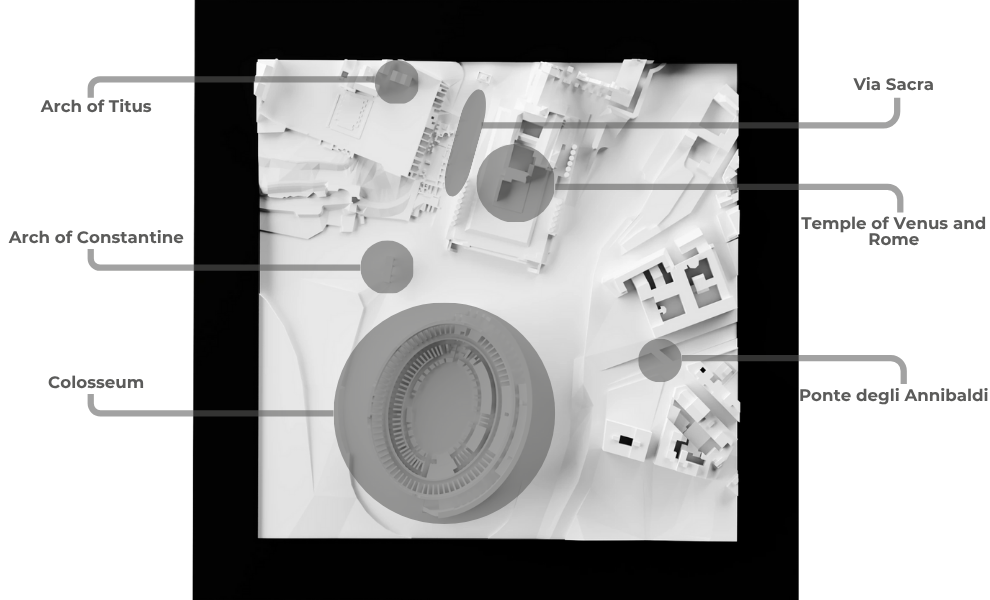
The Colosseum is the symbol of Rome and the largest amphitheater of antiquity. The crowd once roared here during gladiatorial games. The stands held approximately 50 to 65 thousand spectators, and 80 entrances ensured quick arrivals and departures. Beneath the wooden floor covered in sand lay the hypogeum – a network of corridors, cages, and elevators. It served as a backstage area for gladiators and animals as well as a technical stage that changed the flow of performances. A canvas awning (velarium) could be extended above the stands, with the ropes and sails maintained by sailors of the imperial fleet.
Admission for citizens was often free, but seating was strictly divided according to social status. Some sources also mention attempts at re-enacting naval battles, though historians still debate how feasible they actually were.
Today, the Colosseum is part of the UNESCO World Heritage and ranks among the most visited monuments in Europe. Even after two thousand years, it remains monumental, and at first glance, you can feel that great stories were born here. Every visit is a small journey back in time.