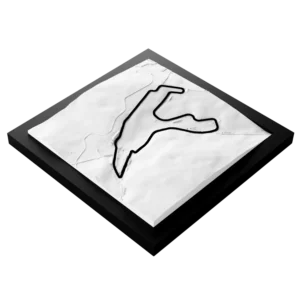
A Formula 1 Fan´s Guide
Monaco Grand Prix: 8 interesting facts about the circuit and a 3D model

„Jewel of Formula 1“
The Monaco Grand Prix - A Circuit Full of History
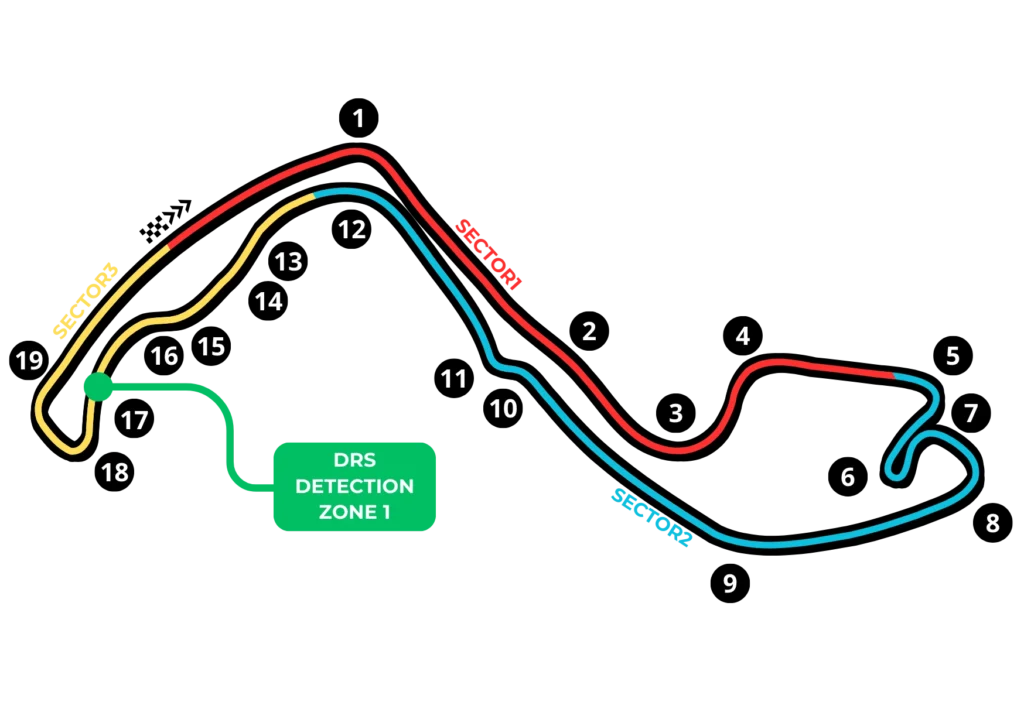
The F1 circuit in Monaco is among the most prestigious and historic tracks in the world. This 3337 m The F1 circuit in Monaco is among the most prestigious and historic tracks in the world. This 3,337 m long street circuit in Monte Carlo features 19 tight corners and offers minimal overtaking opportunities, making it a true test of driving skills. The first Grand Prix was held here on April 14, 1929 , and since then, Monaco has become a symbol of luxury and excellence in motorsport. It was included in the Formula 1 World Championship calendar in 1950 and has been held annually since 1955, making it one of the longest continuously organized F1 events. If you want to learn more about its rich history and unique challenges, check out these interesting facts about the Monaco F1 circuit.
One of the most memorable moments was in 1988, when Ayrton Senna delivered a lap during qualifying that many consider the best qualifying performance in F1 history – beating his teammate Alain Prost by an incredible 1,4 secondsIn the race, however, Senna was leading with a massive gap but crashed at the Portier corner on lap 67. Frustrated, he walked straight to his apartment without a word. Despite this moment, he conquered Monaco and won here six times,which remains a record to this day.
Precision, Elevation, and Zero Margin for Error
The circuit in Monte Carlo is known for its extremely narrow streets, steep elevation changes, and technical difficulty. The track winds through Monte Carlo and gradually climbs up to 44 meters above sea level.Some sections are only 7 metres wide, and the barriers are just a few centimeters away from the car, meaning even the slightest mistake can instantly end the race. If you ever visit the circuit, we highly recommend a guided Walking Tour of the track, where you will learn various interesting facts and behind-the-scenes details up close right on the circuit.

What the drivers say about Monaco
What can you see on your 3D model?
Our 3D model of the Monaco circuit captures not only the legendary corners but also iconic places like Casino Square or La Rascasse. Upon closer inspection, you will discover even more details than you would expect.
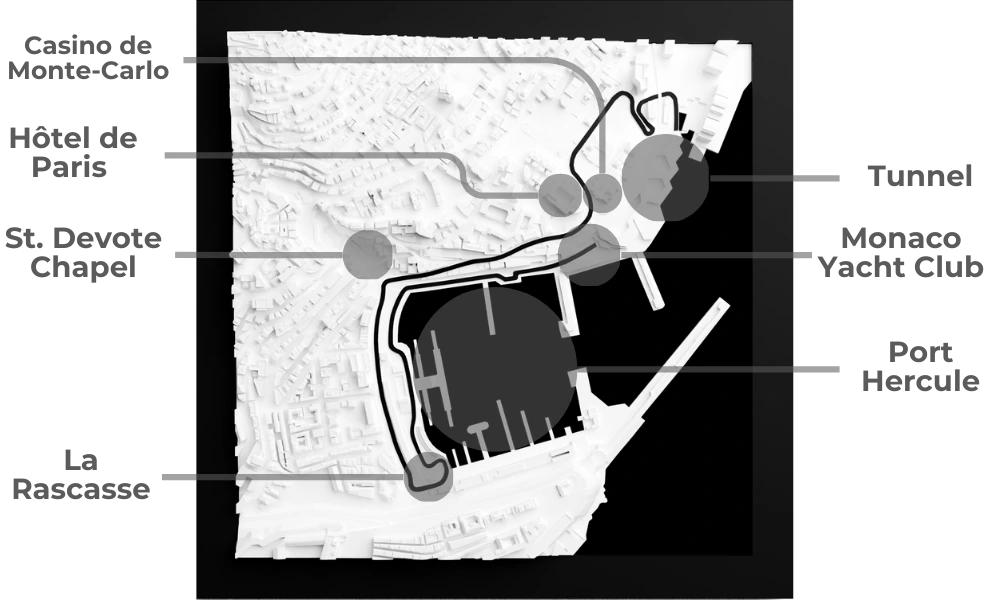
Port Hercule is one of the few deep-water ports on the French Mediterranean coast, capable of accommodating over 760 yachts of various sizes. Especially during the Formula 1 Grand Prix, luxury yachts worth over 100 million eurosanchor here, providing their owners with a front-row seat to watch the race. The port is also surrounded by both historic and modern buildings, creating an iconic backdrop for the entire event. As one might expect, during the F1 weekend, mooring prices increase to up to 3 500 € per night, with the most prestigious spots costing up to 100 000 € for five days.
Did you know that more than 7 million tourists take a selfie in front of the Monte Carlo Casino every year? Casino de Monte-Carlo, built in 1863is a symbol of wealth and luxury in Monaco.It was designed by Charles Garnier, the architect of the Paris opera. This iconic building is located near the famous corner at Casino Square,where F1 drivers pass at a speed of around 80 km/h.
The casino generates significant revenue – contributing up to 5% to Monaco's economy.It has also appeared in several famous films, including James Bond: GoldenEye a Never Say Never Again.
Over the years, the Casino de Monte-Carlo has seen huge wins and losses. The biggest win occurred in 1974 when an Italian player won $1,092,000 on roulette. To prevent gambling addiction among locals, Monegasque authorities ban citizens from gambling and working in the casino – this serves as legal protection for the local residents.
The tunnel under the Fairmont Monte Carlo hotel is a unique architectural feature that combines luxury with technical challenges for the drivers. The hotel, built on water and supported by pillars, has more than 600 rooms. In the tunnel, drivers reach speeds of up to 290 km/h, while having to quickly adapt to sudden changes in lighting conditions.
La Rascasse is both a famous corner and a bar, making it one of the most iconic places on the entire circuit. This narrow part of the track, only 9 meters wide, requires maximum precision from the drivers.
In 1960, Graham Hill compared driving through this corner to riding a bicycle around your own living room - which perfectly captures the technical difficulty and tightness of this legendary section. The La Rascasse bar is also a popular spot for post-race parties and offers a great view of the track.
Hôtel de Paris Monte-Carlo, opened in 1864, is among the most prestigious hotels in the world. It is famous mainly for its wine cellar, which hides more than 600,000 bottles of wine, and its luxury suites, where one night can cost up to €40,000.
The hotel is located near Casino Square and offers a magnificent view of the race.
The modern Monaco Yacht Club building, opened in 2014, was designed by the world-renowned architect Norman Foster. During the Grand Prix, it turns into an exclusive place to watch the race.
Membership in the club is extremely prestigious – annual fees exceed 30 000 €.
The Sainte Dévote Chapel, built in the 11th century, is dedicated to the patron saint of Monaco. It is located at the first corner of the circuit, which is one of the most challenging on the track.
The Sainte Dévote corner is a frequent site of dramatic collisions, especially during the race start. One of the most memorable moments occurred in 1996, when in rainy conditions several cars, including Damon Hill and Michael Schumacher, crashed in this corner – only four drivers finished the race, making it one of the most chaotic in F1 history.
Every year on January 27th, a traditional boat burning ceremony is held at the chapel in honor of Sainte Dévote.

Unforgettable moments
The Monaco circuit has been the scene of countless unforgettable moments in Formula 1 history. Among the most significant are the six victories of Ayrton Senna, which earned him the nickname "King of Monaco". Other legendary drivers who have triumphed here include Graham Hill, nicknamed "Mr. Monaco", and Michael Schumacher. Recently, in 2024, Monaco celebrated a great triumph when Charles Leclerc, a Monte Carlo native, won his home Grand Prix. He became only the second Monegasque to do so, after Louis Chiron, who won in 1931.
Pole Position = Win?
Due to the narrow streets, minimal overtaking opportunities, and the proximity of the barriers, it presents an extreme challenge for the drivers. Every mistake here instantly means the end of the race. Success in Monaco depends mainly on qualifying, because pole position gives the highest chance of winning. Overtaking is exceptionally rare here, but fans still love the drama that Monaco brings.
One of the most iconic moments was the Monaco Grand Prix in 1992, when Nigel Mansell, despite a dominant performance, lost the lead in the final laps due to a technical issue and dramatically tried to overtake Ayrton Senna. However, Senna held the lead and recorded one of the most memorable defensive drives in F1 history. At the same time, strategic decisions, such as perfectly timed pit stops, are crucial and carry the same weight as speed itself.
8 Interesting Facts
V tejto sekcii nájdete fakty o F1 okruhu v Monaku, vrátane osem fascinujúcich detailov o jeho histórii, výzvach a legendárnych momentoch.
Monaco is among the few circuits that do not pay Formula 1 any fee for hosting the race.
The construction of the circuit takes six weeks and its dismantling another three weeks.
The total length of the barriers used to secure the track is approximately 33 kilometers.
The event is also known for its iconic trophy presentation ceremony, during which Prince Albert II personally presents the trophies to the winners. This festive moment further highlights the uniqueness and prestige of the Monaco Grand Prix.
A victory at the Monaco Grand Prix is one of the three components of the prestigious Triple Crown of Motorsport, which includes:
🔸 Victory at the Monaco Grand Prix in Formula 1
🔸 Victory at the 24 Hours of Le Mans
🔸 Victory at the Indianapolis 500
So far, only a single driver in history – Graham Hill – has managed to achieve the complete Triple Crown. Thanks to this, his name is forever written in the history of motorsport as an exceptional all-round racing driver.
The Circuit de Monaco is full of iconic sections that are known not only to Formula 1 fans but also to the general public:
🔹 Sainte Dévote
A sharp right-hand corner right after the start, often the scene of collisions and incidents.
One of the most photographed places on the circuit, where drivers pass by.
🔹 Fairmont Hairpin corner
The slowest corner on the entire F1 calendar. Drivers slow down to approximately 48 km/h, which places an emphasis on technical precision.
🔹 Tunnel
One of the most unique elements of the track. Drivers reach speeds of up to 290 km/h here, while the transition from light to shadow and back presents a major challenge for concentration and stability.
🔹 Rascasse and Anthony Noghès corners
Technically demanding sections before the start-finish straight, where drivers must show maximum precision and control over the car.
With its tightness and strategic importance, the Monaco circuit resembles other street tracks where any accident can decide the course of the race. That is why the "Crashgate" scandal from the 2008 Singapore Grand Prix is often mentioned, where driver Nelson Piquet Jr. deliberately crashed to create an advantage for his teammate Fernando Alonso. This scandal permanently changed the perception of team strategy on street circuits and highlighted how important and fragile racing is in an environment like Monaco.
The pit lane in Monaco is one of the narrowest on the entire F1 calendar. Due to limited space, team principals do not sit in front of their garages as usual. Instead, they are positioned above the garages, which saves space and at the same time provides them with an excellent view of the action on the track. This practical compromise is necessary given the tight conditions of this street circuit.
Over the years, many Formula 1 drivers have chosen Monaco as their place of residence. Currently, top racers such as Charles Leclerc, Lewis Hamilton, Max Verstappen, Lando Norris, Valtteri Bottas, Nico Hülkenberg and Alex Albon live in the principality.
Monaco attracts them not only with its luxurious lifestyle and safety, but also with tax advantages, as residents of the principality do not pay income tax. Moreover, the seaside location, favorable climate, and proximity to racing circuits in Europe make Monaco an ideal place for a professional F1 driver to live.